What Are Samskaras? The Vedic Science of Unconscious Patterns
“Aditi Nirvaan explains what samskaras actually are, how they form, why they persist, and how her Destiny Map and Shadow Mapping methodologies work directly with these Vedic unconscious patterns.”
What Are Samskaras? The Ancient Vedic Concept That Explains Why the Same Patterns Keep Repeating
There is a Sanskrit word that explains more about human behaviour than most modern psychology textbooks do.
Most people who spend time in yoga studios or meditation circles have heard it in passing:
Samskaras.
Usually translated as:
- Impressions
- Karmic imprints
- Conditioning
And then quickly moved past, as though the word itself were enough explanation.
It is not.
Because samskaras, properly understood, are not spiritual metaphors.
They are a precise description of how the unconscious mind actually works.
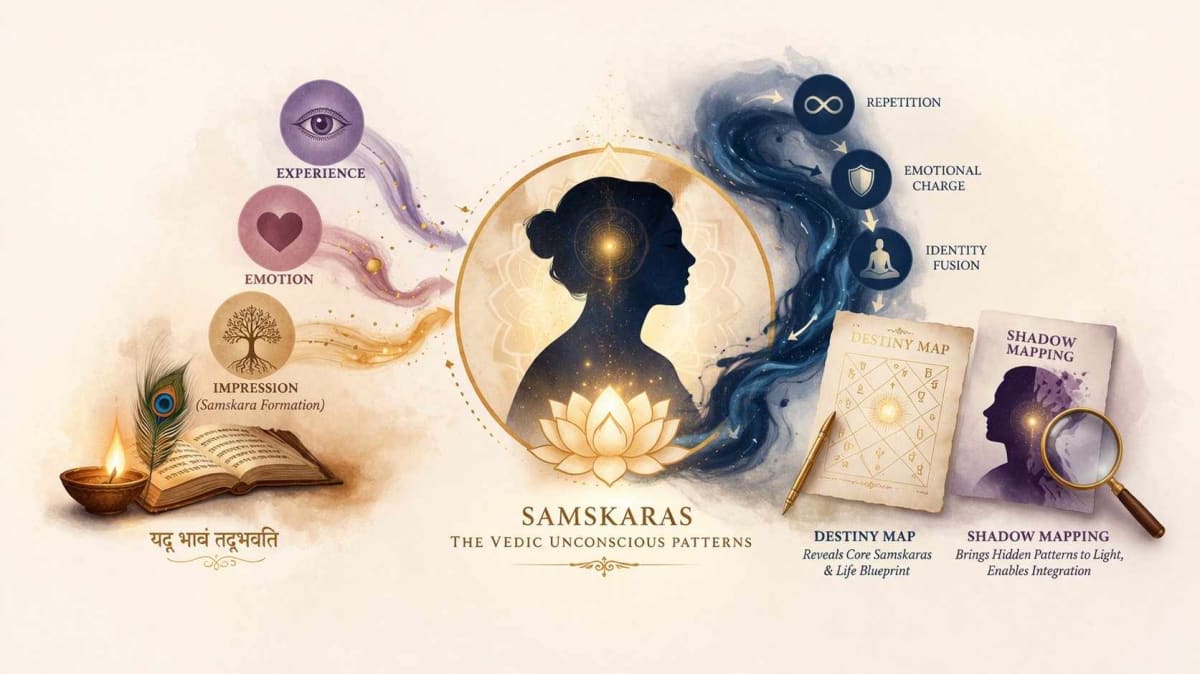
How experience leaves traces.
How those traces accumulate into patterns.
And how those patterns eventually become the invisible architecture of an entire life.
Quietly shaping:
- Decisions
- Relationships
- Emotional reactions
- Recurring situations
Often without the person fully recognising it.
This is what I have spent 22 years working with.
Not samskaras as a concept.
But samskaras as a living reality in the body, nervous system, and unconscious patterns people cannot seem to break no matter how much they understand themselves intellectually.
The Meaning of the Word Samskara
Samskara comes from two Sanskrit roots:
- Sam — complete, well-formed, together
- Kara — from kri, meaning to make or do
A samskara is literally something shaped or formed through experience.
In classical Sanskrit, the word had several meanings.
It referred to:
- Rites of passage
- Refinement of character
- The impressions left behind by thoughts, emotions, and experiences
It is this third meaning that matters here.
In Yoga philosophy, Vedanta, and Ayurveda, samskaras are understood as impressions left on the citta — the field of consciousness and memory — by significant experiences.
These impressions are not merely cognitive.
They are:
- Energetic
- Somatic
- Emotional
- Behavioural
They create grooves in the psyche and body that predispose a person to respond in similar ways to similar situations.
The Vedic tradition describes the accumulation of these grooves as creating vasanas:
Deep tendencies and habitual responses operating largely beneath conscious awareness.
How Samskaras Actually Form
Every significant experience leaves a trace.
This is not metaphorical.
Modern neuroscience describes the same process through conditioned neural pathways.
Repeated experiences strengthen specific patterns in the nervous system, making associated reactions increasingly automatic.
The Vedic tradition called these patterns samskaras thousands of years ago.
Samskaras form most deeply when experiences carry significant emotional charge, especially during:
- Childhood
- Moments of vulnerability
- States of heightened emotional sensitivity
The child who experiences something overwhelming does not merely store it as memory.
The experience becomes an impression shaping future perception and behaviour.
And the impression is not stored only in thought.
It is stored in:
- The body
- The breath
- Posture
- The nervous system's habitual responses
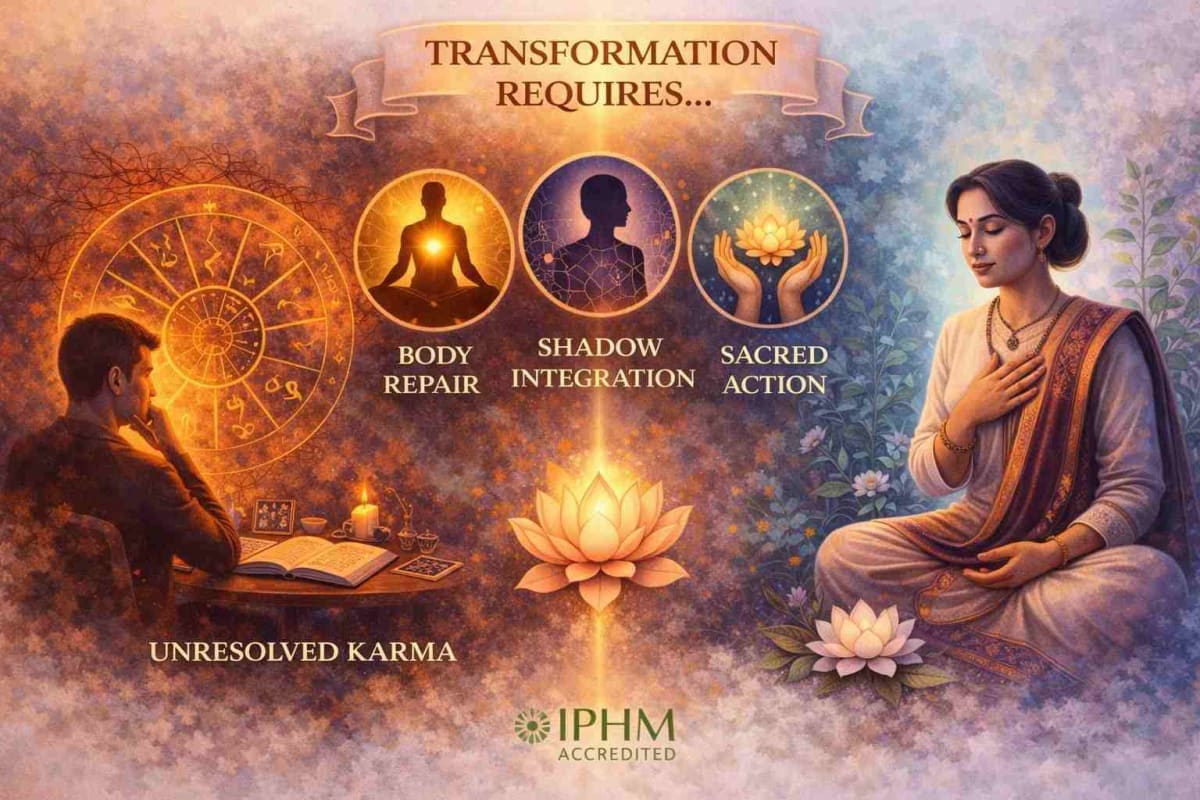
This is why purely cognitive approaches to change often fail to create structural transformation.
The samskara is not held in the thinking mind.
It is held much deeper.
The Three Essential Qualities of Samskaras
Classical Yoga philosophy identifies three core qualities of samskaras.
Understanding them explains why these patterns feel so persistent.
1. Latency
A samskara can remain dormant for years.
Then suddenly activate when circumstances resemble the original conditions under which it formed.
The adult abandoned emotionally in a relationship may react with the intensity of a six-year-old because the original samskara has been activated.
The body responds before conscious awareness catches up.
2. Repetition
Samskaras have a tendency to recreate the conditions of their original formation.
Not as punishment.
Not as fate.
But because incomplete experiences seek resolution.
The repetition loop is the samskara attempting completion.
This is why people often find themselves living variations of the same pattern repeatedly:
- The same relationship dynamic
- The same conflict with authority
- The same financial ceiling
- The same emotional collapse at the same threshold
3. Mutual Reinforcement
Samskaras rarely operate alone.
They cluster.
A samskara around worthiness may reinforce:
- Visibility issues
- Relationship patterns
- Anger suppression
- Fear of success
Working deeply with one pattern often reveals the entire network connected to it.
Samskaras in the Mahabharata and Ramayana
The Vedic tradition did not explain samskaras only philosophically.
It embedded them in stories.
Karna in the Mahabharata is one of the clearest illustrations.
The samskara of abandonment and illegitimacy formed at birth shaped every major decision of his life.
His loyalty to Duryodhana, his need for recognition, his inability to step away from destructive conflict:
All of it reflected a samskara operating beneath conscious intelligence.
Not because Karna lacked strength.
But because he never had a container in which to see the pattern clearly enough to choose differently.
Arjuna’s crisis at Kurukshetra is another example.
His paralysis before battle was not weakness.
It was the collision between accumulated samskaras around:
- Loyalty
- Identity
- Relationship
- Dharma
The Bhagavad Gita is, in many ways, a teaching about acting consciously without being ruled by unconscious impressions.
Samskaras in Modern Indian Life
This framework is not ancient history.
It explains modern life with remarkable precision.
Many Indian adults carry samskaras formed not only through personal childhood experiences but through intergenerational patterns.
The joint family system.
Conditional achievement.
Community expectations.
The emotional vocabulary available — or unavailable — within specific households.
These are not abstract cultural concepts.
They become living impressions in the nervous system.
The executive in Mumbai repeatedly hitting the same invisible ceiling.
The woman recreating her mother's emotional dynamics despite consciously rejecting them.
The healer who helps others transform while privately carrying the same unresolved pattern.
These are samskaras in motion.
The Difference Between Managing a Samskara and Integrating One
This distinction changes everything.
Managing a Samskara
Managing a samskara means:
- Recognising the pattern
- Building awareness around it
- Interrupting it consciously
- Developing strategies to respond differently
This is valuable.
But the samskara itself remains intact.
The groove is still there.
The activation still happens.
The effort required to manage it continues indefinitely.
Integrating a Samskara
Integration works differently.
It works directly with the impression itself:
- In the body
- In the nervous system
- In the emotional reality where the samskara formed
When integration genuinely happens, the pattern loses its compulsive quality.
The charge stored in it moves.
The person no longer needs constant effort to interrupt it because the underlying structure has changed.
This is the difference between:
- Managing a pattern for life
- Actually becoming free of it
How My Work Uses This Framework
The three methodologies I developed over 22 years — Destiny Map™, Shadow Mapping™, and NeuroSomatic Breathwork™ — are all designed to work with samskaras at the level where they are actually held.
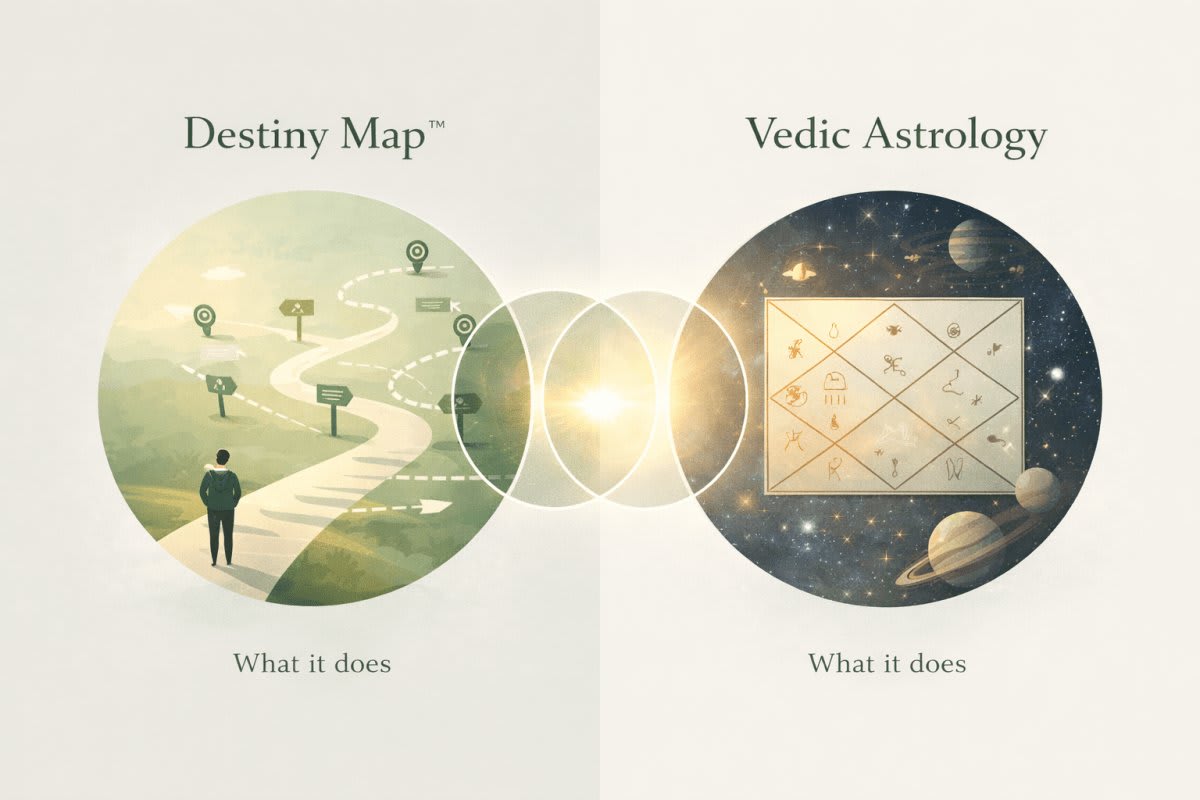
Destiny Map™ (DM™)
Identifies the specific samskara most active in your life right now.
Not generically.
Precisely.
Where it formed.
What it protects.
What it has been costing.
And what becomes possible once it is fully visible.
Shadow Mapping™ (SM™)
Works with samskaras pushed into the unconscious.
The patterns operating from the shadow.
The work here is integration:
Restoring disowned material into conscious relationship so it functions as a resource rather than a compulsion.
NeuroSomatic Breathwork™ (NSB™)
Works directly with the somatic reality of the samskara:
- The breath patterns
- The nervous system states
- The body contractions holding the imprint in place
This is not relaxation breathwork.
It is structured somatic work designed to create the physiological conditions in which deeply held samskaras can begin to integrate.
Samskaras and Jungian Psychology
Carl Jung arrived at a remarkably similar understanding through a completely different tradition.
His concept of the complex — emotionally charged clusters of memories and responses operating autonomously in the psyche — parallels the Vedic understanding of samskaras closely.
Both frameworks describe:
- Impressions formed through significant experiences
- Activation by similar future circumstances
- Patterns operating below conscious awareness
Jung openly acknowledged the influence of Indian philosophy on his work.
The convergence between depth psychology and Vedic philosophy is not accidental.
They are describing the same underlying human reality through different languages.
Where This Work Begins
If something in this article has clarified a pattern you have sensed but never fully named, that matters.
Understanding samskaras intellectually is a beginning.
But the samskara itself is not intellectual.
It is embodied.
And it requires an embodied, expert-held process to integrate.
The Destiny Map™ session is designed specifically to identify the samskara most active in your life right now:
- Where it formed
- What it protects
- What it costs
- What becomes possible when it is finally visible
And if you want to work directly with the shadow material connected to those samskaras, the 3 Hour Shadow Work Masterclass (Live) is where that deeper process begins.

Written by
Aditi Nirvaan
India's Only IPHM Accredited Shadow Work Expert, TEDx Speaker, and creator of Shadow Mapping™, NeuroSomatic Breathwork™ & Destiny Map™. Featured in Vogue India, Times of India, Mid-Day & Life Positive.