How to Add Shadow Work to Your Coaching Practice (A Practitioner's Guide)
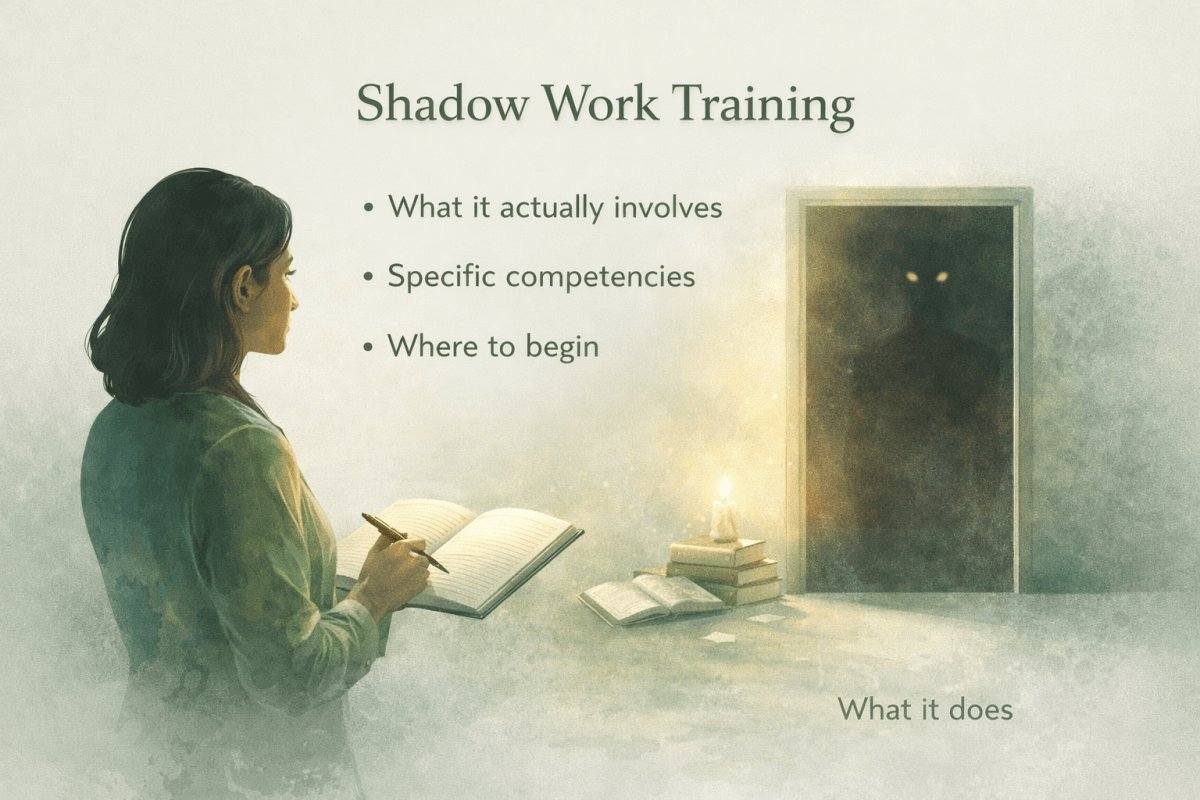
“Aditi Nirvaan explains what it actually takes to add shadow work to a coaching or healing practice, the specific competencies required, and where to begin.”
How to Add Shadow Work to Your Coaching Practice Safely and Professionally
If you are a coach, therapist, healer, or facilitator reading this, something has probably already shifted in how you understand your work.
You have likely noticed that many traditional frameworks and coaching models take clients to a certain depth and then stop.
Not because the frameworks are ineffective.
But because the client’s material often lives somewhere those frameworks were never designed to reach:
- In the nervous system
- In the body
- In unconscious patterns formed long before the client had language for them
Shadow work operates at that level.
And the practitioners doing the most meaningful transformational work in India today are the ones who have learned how to integrate shadow work with the rigour, pacing, and safety it genuinely requires.
This article is about:
- What it actually means to add shadow work to your practice
- What competencies are required
- What changes when you develop them
- And the non-negotiables if you want to do this responsibly
What It Actually Means to Add Shadow Work to a Practice
This needs to be said clearly because it is the first thing most practitioners misunderstand.
Adding shadow work to your coaching practice does not mean:
- Learning a few “deep” questions
- Reading Jung and using the terminology
- Creating a shadow work offer because the demand is growing
It means developing genuine competency in working with unconscious material:
- Trauma-informed
- Somatically grounded
- Properly paced
- Clinically held
The shadow operates beneath conscious awareness.
Which means the practitioner must be able to work with:
- Nervous system responses
- Somatic cues
- Protective structures
- Unconscious adaptations
Not just cognitive insight.
The International Coaching Federation has increasingly acknowledged shadow work as a legitimate and important dimension within coaching because unconscious dynamics shape every coaching relationship.
What matters is whether the practitioner has the competency to work with those dynamics safely.
It Begins With Your Own Shadow
This is foundational.
And it cannot be skipped.
You cannot facilitate shadow work in territory you have not entered yourself.
Not safely.
Not consistently.
Not at transformational depth.
This is not philosophy.
It is a practical observation from 22 years of working with practitioners across India and internationally.
The edge of the practitioner’s own unresolved material almost always becomes the ceiling for the client’s process.
The client approaches something significant.
And unconsciously the practitioner:
- Redirects
- Rescues
- Explains
- Interrupts the silence
Not because they are careless.
Because their own nervous system has reached territory it does not yet fully trust.
This is why the starting point for adding shadow work to any practice is not technique.
It is your own deep, structured shadow integration.
Practitioners who skip this and move directly into learning methods often create sessions that sound profound while never fully reaching the material itself.
The Core Competencies Shadow Work Requires
1. Somatic Awareness and Nervous System Tracking
The shadow is held somatically.
In:
- Muscular contraction
- Breath restriction
- Postural adaptations
- Autonomic nervous system responses
A practitioner unable to track these cues in real time is working with only part of the client’s process.
This is the difference between:
- Talking about the pattern
- Actually reaching the pattern
2. Trauma-Informed Pacing
Shadow material was pushed underground for a reason.
When it surfaces too quickly, the nervous system can become overwhelmed.
This creates activation without integration.
Clients leave destabilised instead of transformed.
Trauma-informed pacing means understanding:
- The client’s window of tolerance
- How to regulate intensity
- How to slow the process before overwhelm occurs
- How to create integration rather than retraumatisation
This is one of the most essential clinical skills in shadow work facilitation.
3. The Ability to Hold Rather Than Fix
This is especially challenging for coaches.
Traditional coaching culture values:
- Forward movement
- Insight
- Resolution
Shadow work requires something different.
The capacity to stay present with difficult material without:
- Fixing it
- Reframing it
- Explaining it away
- Moving it forward prematurely
When clients contact genuine shadow material, the practitioner’s primary task is holding the container.
That quality of grounded holding is not technique.
It is the product of the practitioner’s own integration.
4. Distinguishing Shadow From Protector
This is a sophisticated but critical distinction.
The protector is not the shadow itself.
It is the adaptive structure built to protect the person from the original wound.
Working directly against the protector rarely produces integration.
It creates resistance.
The facilitator must learn:
- How to identify protective structures
- How to understand their function
- How to build enough safety for deeper material to emerge naturally
This requires training, supervision, and experience.
5. Closing and Integration
What happens at the end of a session matters enormously.
Material surfaced during shadow work must be:
- Grounded
- Integrated
- Properly closed
Opening significant unconscious material without integration skills leaves the client vulnerable and dysregulated.
This is one of the clearest differences between structured professional shadow work training and casual exposure through retreats or social media spaces.
What Changes in Your Practice When You Develop These Skills
The shift is not subtle.
The sessions deepen.
Not because the questions become more impressive.
Because the container becomes safer.
Clients feel the difference immediately.
Often before they consciously understand what changed.
The quality of:
- Presence
- Stillness
- Safety
- Depth
Changes completely.
The outcomes also become more structural.
Clients stop merely understanding their patterns.
They begin genuinely integrating them.
The referrals change too.
People do not simply say:
“You should try coaching.”
They say:
“You need to work with this specific person about the thing you have been carrying for years.”
That level of referral only happens when the work creates real transformation.
The Current Landscape in India
The shadow work space in India is growing rapidly.
Faster than the structures properly training practitioners.
This creates both:
- A serious responsibility issue
- A significant opportunity
Weekend certifications and social media visibility are increasingly being mistaken for genuine competency.
But clients — especially urban Indian clients who have already done significant personal development work — can increasingly feel the difference.
They can sense when a practitioner:
- Has genuinely done the work
- Understands nervous system regulation
- Can safely hold transformational depth
The practitioners who develop real competency in this space will stand apart in ways marketing alone cannot replicate.
A Necessary Note on Scope
Shadow work coaching is not therapy.
It is not psychiatric treatment.
And it is not appropriate for every client or every situation.
Clients in:
- Acute crisis
- Psychosis
- Severe trauma presentations
May require additional clinical support beyond the scope of coaching.
Understanding the limits of your scope is part of ethical professional development.
Not weakness.
Maturity.
Where This Journey Begins
Most practitioners who eventually join the Shadow Mastery Coaching Certification begin with the 3 Hour Shadow Work Masterclass (Live).
Not because it is a prerequisite.
Because it is where most practitioners first experience what properly structured, somatically grounded shadow work actually feels like from the inside.
And that experience usually clarifies whether this is truly the level of work they want to offer.
The Masterclass is:
- Trauma-informed
- Clinically structured
- Somatically grounded
- Built on the Shadow Mapping™ (SM™) methodology
It is the clearest entry point into this work for practitioners wanting to add genuine shadow work competency to their practice.
Book your place in the 3 Hour Shadow Work Masterclass
The Shadow Mastery Coaching Certification
For practitioners ready for formal training, the Shadow Mastery Coaching Certification is the IPHM Accredited, internationally recognised certification developed through 22 years of direct transformational practice.
It develops both:
- The practitioner’s own integration
- The clinical competency required for ethical shadow work coaching
Graduates wanting to deepen into advanced facilitation can continue into the Shadow Mastery Facilitator Certification, focused on intensive and group transformational work.
Details for both certifications are available after the Masterclass.

Written by
Aditi Nirvaan
India's Only IPHM Accredited Shadow Work Expert, TEDx Speaker, and creator of Shadow Mapping™, NeuroSomatic Breathwork™ & Destiny Map™. Featured in Vogue India, Times of India, Mid-Day & Life Positive.