Burnout Is Not the Problem. Nervous System Collapse Is.
“Aditi Nirvaan explains why burnout recovery fails for so many high-functioning Indian professionals, what nervous system collapse actually is, and what genuine resolution actually requires.”
Burnout or Nervous System Collapse? Why Rest Is Not Fixing the Exhaustion
You took the holiday.
You slept in.
You handed off the project.
You did the thing everyone said would help.
And you came back exactly as tired as you left.
Maybe more.
This is the experience most conversations about burnout do not adequately explain.
Because the framework most people are using is the wrong one.
And when the framework is wrong, the solutions generated from it rarely reach the actual problem.
Burnout, as it is commonly understood, is framed as resource depletion:
- You gave too much
- You rested too little
- The tank ran empty
The implied solution becomes:
- Rest
- Recovery
- Better boundaries
- A slower pace
And if burnout were only a resource depletion issue, those solutions would fully work.
For many high-functioning adults, they do not.
Not fully.
Not structurally.
Not for the professionals who take every available holiday and still return to the same flatness.
Not for the founders who restructure their schedules, hire support, reduce workload — and still cannot recover the sense of aliveness that used to exist.
What they are experiencing is often not conventional burnout.
It is nervous system collapse.
And that is an entirely different problem:
- With a different cause
- A different physiology
- And a different path toward resolution
What the Distinction Actually Means
The Global Wellness Summit identified nervous system exhaustion as one of the defining wellness crises of 2026.
Grazia India referred to it as the era of great exhaustion.
Trend forecasting firm WGSN predicted that the accumulated impact of sustained dysregulation would become impossible to manage through conventional wellness tools alone.
A Deloitte workplace wellbeing survey found that 77% of Indian professionals reported burnout in their current role.
Research published in Scientific Reports found that 42% of urban Indian youth reported medium to high levels of emotional suppression:
A coping pattern strongly associated with:
- Anxiety
- Depression
- Chronic internal load
These numbers matter.
But statistics alone do not fully describe the lived experience underneath them.
What Nervous System Collapse Actually Is
To understand this properly, it helps to understand how the autonomic nervous system responds to prolonged stress.
When genuine demand appears, the sympathetic nervous system activates.
Cortisol rises.
Adrenaline mobilises.
Attention narrows.
The body prepares to respond.
This is not dysfunction.
It is biology doing exactly what it was designed to do.
But the system was designed for activation to be followed by recovery.
The demand passes.
The parasympathetic nervous system restores regulation.
The body enters repair and restoration states.
Modern professional life often interrupts that cycle completely.
Especially in high-pressure urban environments.
The nervous system remains activated:
- Not for days
- Not for weeks
- But for years
Eventually, two things begin happening:
- The nervous system becomes increasingly sensitised
- The threshold for perceived threat lowers dramatically
Then, after prolonged overload, the system does something most burnout conversations entirely miss.
It collapses.
In Polyvagal Theory, developed by Dr. Stephen Porges, this is called the dorsal vagal state:
A biological shutdown response activated when sustained threat exhausts the body’s capacity for active mobilisation.
This is not ordinary tiredness.
It is a structural nervous system state.
And the nervous system does not leave that state simply because you took time off.
What Collapse Feels Like From the Inside
This is the part people recognise immediately.
Usually with relief at finally having language for it.
The Flatness
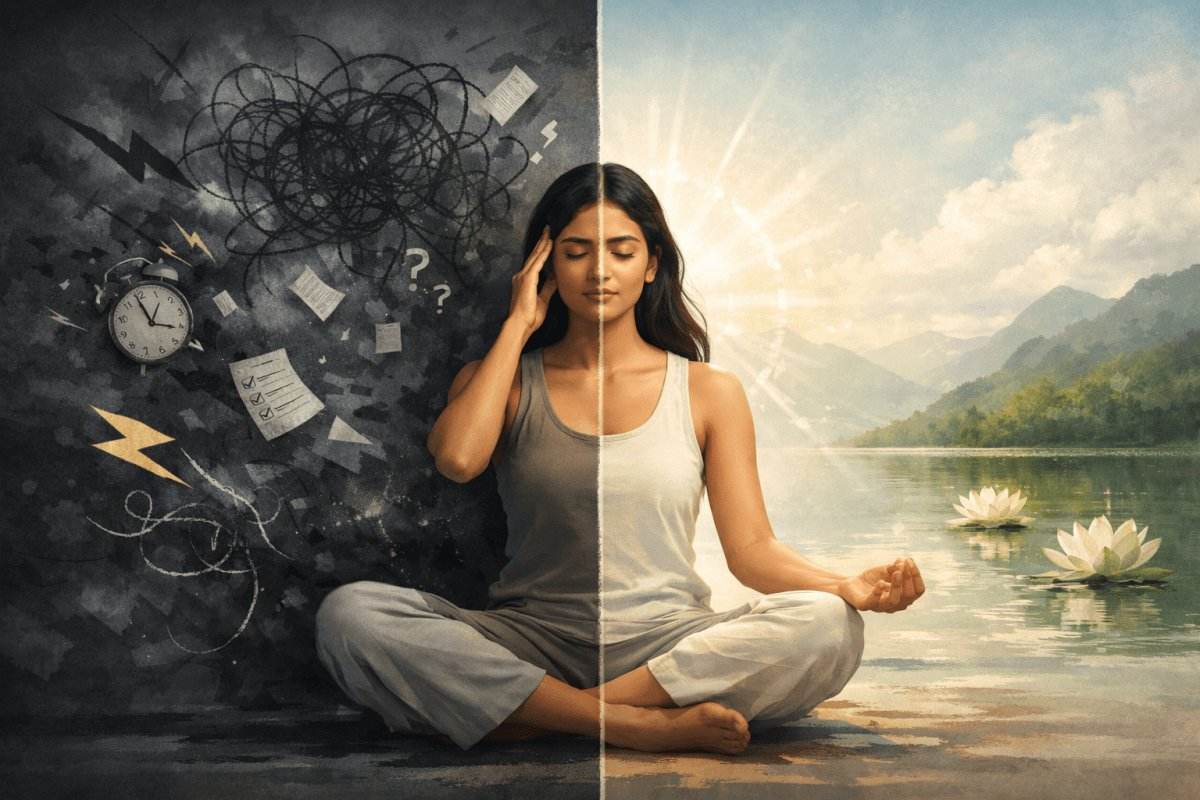
You continue functioning.
You still work.
You still deliver.
But inside, something feels significantly dimmer than before.
Things that once produced:
- Excitement
- Meaning
- Connection
- Aliveness
No longer fully land.
The Inability to Rest Into Recovery
Sleep may be adequate in hours.
But not restorative in quality.
Vacations help briefly and then the same exhaustion returns.
The tiredness feels deeper than the body.
The Disconnection From Desire
Many people in collapse cannot clearly answer:
- What do I actually want?
- What excites me?
- What am I moving toward?
Not only professionally.
Generally.
The nervous system becomes so oriented toward survival that desire itself goes quiet.
The Narrowing of Emotional Range
The emotional spectrum contracts.
Not complete numbness.
More like reduced bandwidth.
- The highs feel muted
- The lows feel flattened
- The middle becomes functional but emotionally thin
Some psychiatrists in Hyderabad recently described this as functional freeze:
High-functioning externally.
Internally blank.
This is not a motivation issue.
It is a nervous system issue.
Why Rest Alone Does Not Resolve It
This is the most important distinction.
Rest does not fully resolve nervous system collapse because collapse is not fundamentally caused by insufficient rest.
It is caused by the nervous system entering a structural survival state after prolonged unresolved threat.
The nervous system is not waiting for permission to rest.
It is waiting for safety.
And biological safety is not simply the absence of work or demand.
In Polyvagal Theory, genuine safety corresponds to the ventral vagal state:
- Regulation
- Connection
- Presence
- Social engagement
- Internal settledness
Many high-functioning adults have not inhabited that state consistently for years.
Some never fully did.
Because the nervous system was already dysregulated long before professional pressure intensified it.
The Layer Beneath the Collapse
This is the layer conventional burnout conversations rarely reach.
Beneath the collapse are often unintegrated samskaras:
Unconscious karmic impressions formed through early significant experiences.
The person who learned:
- Love was conditional on performance
- Their needs were unsafe
- The way to belong was through achievement, management, and self-suppression
Did not simply develop personality traits.
Their nervous system adapted structurally.
Those adaptations continue generating low-grade threat responses beneath the surface of adult professional life.
This is why reducing workload alone often fails to resolve the exhaustion.
The professional demands did not create the dysregulation.
They amplified patterns already present.
The nervous system was bracing long before the calendar became overloaded.
The Indian Context
Nervous system collapse has a very specific texture in the Indian professional context.
Indian culture often equates endurance with virtue.
The person who:
- Does not complain
- Manages everything quietly
- Keeps delivering regardless of cost
Is frequently the person most respected.
This means nervous system signals get overridden continuously:
- Fatigue
- Flatness
- Disconnection
- Loss of desire
Are reframed as:
- Weakness
- Ingratitude
- Lack of discipline
And pushed back underground.
The result is a generation of highly capable professionals sustaining lives their nervous systems are no longer biologically able to support safely.
The Vedic tradition actually understood this dynamic clearly through the framework of samskaras:
The accumulated unconscious impressions shaping how the nervous system relates to the world.
What modern neuroscience calls chronic dysregulation, the Vedic tradition recognised centuries ago through different language.
What Resolution Actually Requires
Most wellness approaches focus on:
- Reducing workload
- Improving recovery
- Developing healthier stress management
These can help.
But nervous system collapse requires work at a deeper level.
1. Somatic Nervous System Work
The nervous system does not update through insight alone.
It updates through embodied experience.
Through somatic processes creating actual physiological regulation.
This is why NeuroSomatic Breathwork™ exists:
To work directly with the nervous system where the collapse is physically held.
2. Integration of the Samskaras Beneath the Dysregulation
The underlying unconscious patterns must be identified precisely:
- Where they formed
- What they protect
- How they continue generating threat responses
This is the work of:
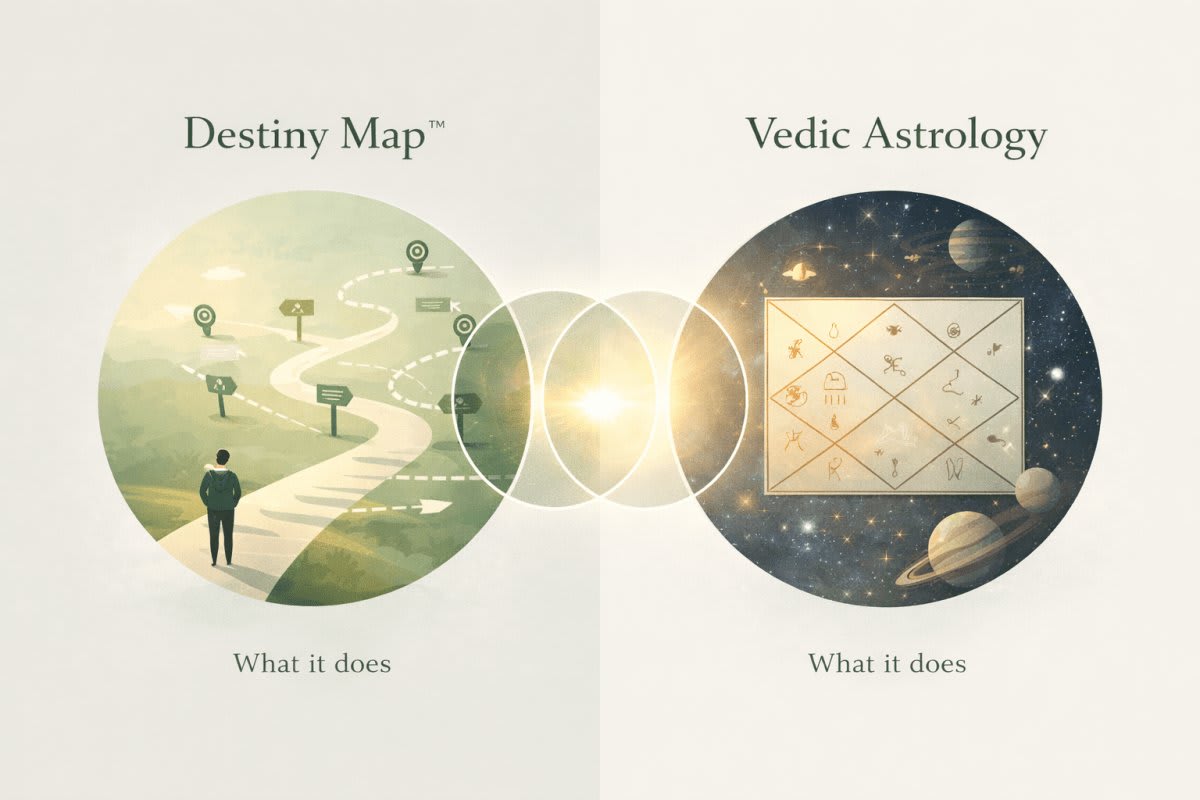
- Destiny Map™
- Shadow Mapping™
Not symptom management.
Structural integration.
3. A Trauma-Informed, Expert-Held Container
Nervous system collapse does not fully resolve through isolated self-help.
The body requires a relational experience of genuine safety.
Not conceptual reassurance.
Actual physiological safety.
This is why expert-held somatic work matters so profoundly.
A Final Thing Worth Saying
The exhaustion you are carrying is not evidence of weakness.
It is not poor resilience.
It is not a personal failure.
It is the accumulated cost of sustaining a high-functioning life on top of a nervous system that has been operating in survival mode for far too long.
The fact that you have continued functioning while carrying that weight is significant.
But it is not sustainable indefinitely.
And it is not the ceiling of what your life can feel like from the inside.
The collapse is not a sentence.
It is a signal.
A signal that the nervous system has reached the limit of what can be managed through:
- Willpower
- Strategy
- Override
And that something fundamentally different is now required.
Not more productivity optimisation.
Not another mindset shift.
But work at the level where the collapse is actually held:
- In the body
- In the nervous system
- In the unconscious patterns shaping your baseline experience of life
Where This Work Begins
The 3 Hour Shadow Work Masterclass (Live) is the starting point for understanding and working directly with the nervous system patterns sustaining collapse.
It is:
- Trauma-informed
- Somatically grounded
- Built on NeuroSomatic Breathwork™ and Shadow Mapping™
- Designed for structural regulation rather than temporary relief
Book your place in the 3 Hour Shadow Work Masterclass
And if you want to identify the deeper samskara beneath your exhaustion — the unconscious pattern generating the collapse itself — the Destiny Map™ session is where that process begins.

Written by
Aditi Nirvaan
India's Only IPHM Accredited Shadow Work Expert, TEDx Speaker, and creator of Shadow Mapping™, NeuroSomatic Breathwork™ & Destiny Map™. Featured in Vogue India, Times of India, Mid-Day & Life Positive.